research · Retention · 6 min read
Subscription SEO and retention: the pages members search for after they join
Subscription SEO supports retention because members search too: for a charge they do not recognize, for how to change a plan, for how to cancel. On an adult platform those searches are more anxious and more private. Pages that answer them clearly can prevent disputes and keep members who were only confused.
1.0 Members search too
Most SEO effort goes into people who have not joined yet. But members search as well, and their searches are specific: a strange line on a card statement, how to switch plans, how to cancel before the next renewal. If the platform's own site does not answer, a forum thread or a complaint site will, usually less kindly.
On an adult platform these searches are also more private. The person searching may be embarrassed, may be sharing a card with a partner, or may not be the member at all. The pages that answer them have to be clear, calm and safe for anyone to read.
2.0 The unrecognized charge
Chargebacks911's 2025 Cardholder Dispute Index found that 40% of respondents often fail to recognize purchases on their statements because billing descriptors are confusing or incomplete, and 76% prefer to settle disputes through their bank. Visa, the report notes, estimates that misuse can account for up to 75% of all chargebacks.
Adult platforms tend to use discreet descriptors, for good reasons. That can make the problem worse: a member, or someone else in the household, sees an unfamiliar name and calls the bank. A plain public page for that exact name gives them an answer first.
a descriptor help page
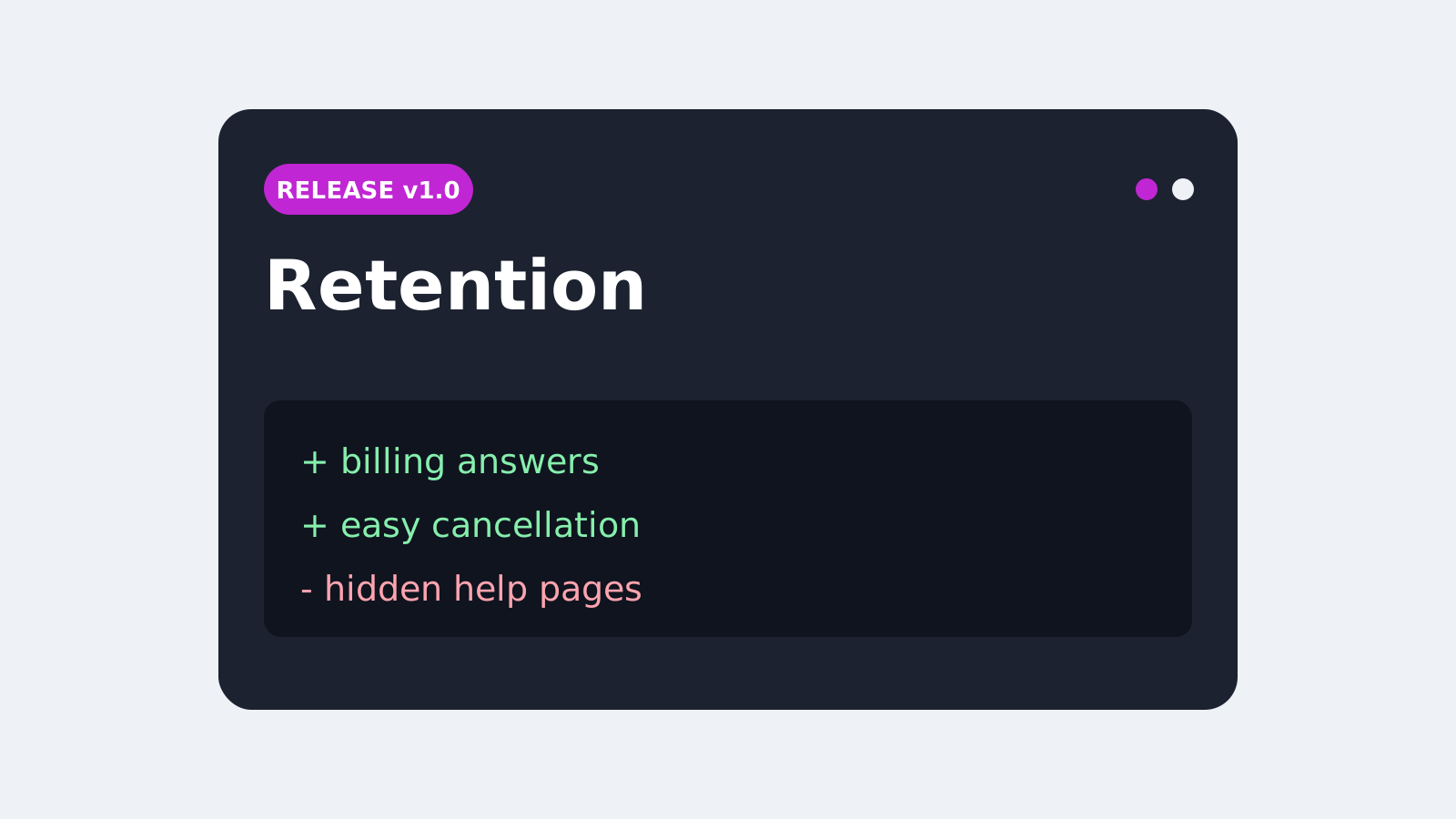
+ Title: What is [DESCRIPTOR] on my statement?+ Plain answer, safe for work, with how to contact support and request a refund- No page at all, so the first result is a dispute forum
3.0 What the card networks already offer
Visa's own guidance on friendly fraud recommends recognizable billing descriptors and detailed confirmations as the first line of defense. The networks also run tools that put more information in front of the cardholder before a dispute starts: Visa's Order Insight and Mastercard's Consumer Clarity, from its Ethoca business, can show the merchant's name, logo and purchase details inside the cardholder's banking app.
These tools and a good help page work together. The banking app shows the name; the help page, found when that name is searched, explains it. Two practical points follow. Keep the descriptor consistent, because Visa's Compelling Evidence 3.0 rules, in use since April 2023, compare past transactions and expect the first six characters of the descriptor to match. And where your processor allows it, include a support web address or phone number in the descriptor, so the search that follows leads straight to you.
4.0 Writing the descriptor page
The reader of this page may be the member, a partner who shares the card, or a parent who pays the bill. Write for all of them. Open with a plain sentence confirming that the name belongs to your company and that it is a charge for an online subscription. Then say what to do: how the account holder can check their account, how to cancel, and how to request a refund if the charge was not authorized.
Do not describe the content, show any images, or ask the reader to log in to learn more. Give a support email or form that answers within a working day. The aim is simple: anyone who lands on this page should be able to resolve the question with you, without calling their bank.
5.0 When the reader is not the member
Some people who find the descriptor page did not make the purchase. A partner may share the card; a parent may believe a child used it. These cases need a fast, respectful path that does not ask the reader to prove much or to read anything uncomfortable.
- A clear line that anyone who did not authorize the charge can contact support for a refund, with a form that asks only for what is needed to find the transaction.
- A commitment to close the account and refund the charge promptly where a minor may have been involved, and to review how the age check was passed.
- A named response time, and a reply from a person rather than a template where the case is sensitive.
Handled well, these cases end as refunds rather than chargebacks, and a platform learns where its age checks or payment controls need work. Handled badly, they become the disputes and complaints that card networks and regulators notice.
6.0 The pages worth ranking
| Search | Page that should answer it |
|---|---|
| "[descriptor] charge" | What this charge is, and how to get help |
| "[platform] cancel" | Step-by-step cancellation, easy to find |
| "[platform] refund" | Refund policy in plain words |
| "[platform] change plan" | Plans, pausing and downgrading |
| "[platform] privacy" | What data is kept and how to delete it |
| "[platform] payment failed" | How to update a card, linked from every failed-payment email |
| "[platform] delete account" | How to close the account and what happens to data afterward |
7.0 Writing them well
- Safe for work throughout, since the reader may not be the member.
- One question per page, answered in the first two sentences.
- No dark patterns: cancellation should be as easy to find as sign-up. State renewal laws, California's most of all since its 2025 amendments, and the FTC's reading of federal law all point the same way: leaving must not be harder than joining.
- A clear support contact, so people can reach you before they reach their bank.
They belong with the other open pages covered on subscription platform SEO. They are not a substitute for fixing billing problems, which belong with your payment provider.
8.0 Renewal reminders and receipts
Emails are part of the same system. A clear receipt after each charge, sent from a recognizable sender with the descriptor name in it, answers the question before anyone searches. Renewal reminders before an annual plan renews, which some state laws require, should link to the plan change and cancellation pages. Members who leave through that route leave as former customers rather than as disputes, and some of them come back.
9.0 A monthly routine
- Search your descriptor and your platform name with "charge", "cancel" and "refund", logged out, and note what ranks above your own pages.
- Read a sample of support tickets for new questions that deserve a page.
- Check that every help page still matches the current plans, prices and cancellation steps.
- Compare dispute counts for unrecognized charges with the month before.
10.0 Measuring the effect
Track three things monthly: organic visits to help pages, support tickets and disputes that mention an unrecognized charge, and cancellations that come through your own process rather than a bank. The before-and-after on those numbers tells you whether the pages are working. The wider plan is on membership growth, the legal background on adult SaaS marketing, and the order of work in our 90-day roadmap.
11.0 References
The bodies behind the facts above. Their own pages are the authority if anything differs.
FAQ Questions
Should the billing descriptor mention adult content?
Most platforms use a discreet descriptor, which is understandable, but it has to be recognizable to the person who paid. A public page explaining the descriptor bridges that gap without putting anything explicit on a bank statement.
Will a cancellation page make more people cancel?
People who want to cancel will find a way. A clear page means they leave without a dispute or a complaint, and some may find a pause or plan change that suits them better.
Should help pages be indexed?
Yes, the public ones: billing, account, privacy and cancellation. Keep them safe for work and free of member data.
Should we change our billing descriptor to something more discreet?
Think carefully before changing it. A name members do not recognize causes disputes, and Visa's Compelling Evidence rules compare past transactions by the start of the descriptor. A consistent, recognizable name plus a clear help page usually works better.