research · Profiles · 6 min read
Member and creator profile SEO, built on consent
Creator profiles can be among a platform's most searched pages, and they describe real people who may have good reasons to keep parts of their lives private. A profile template that ranks well and respects that is worth getting exactly right.
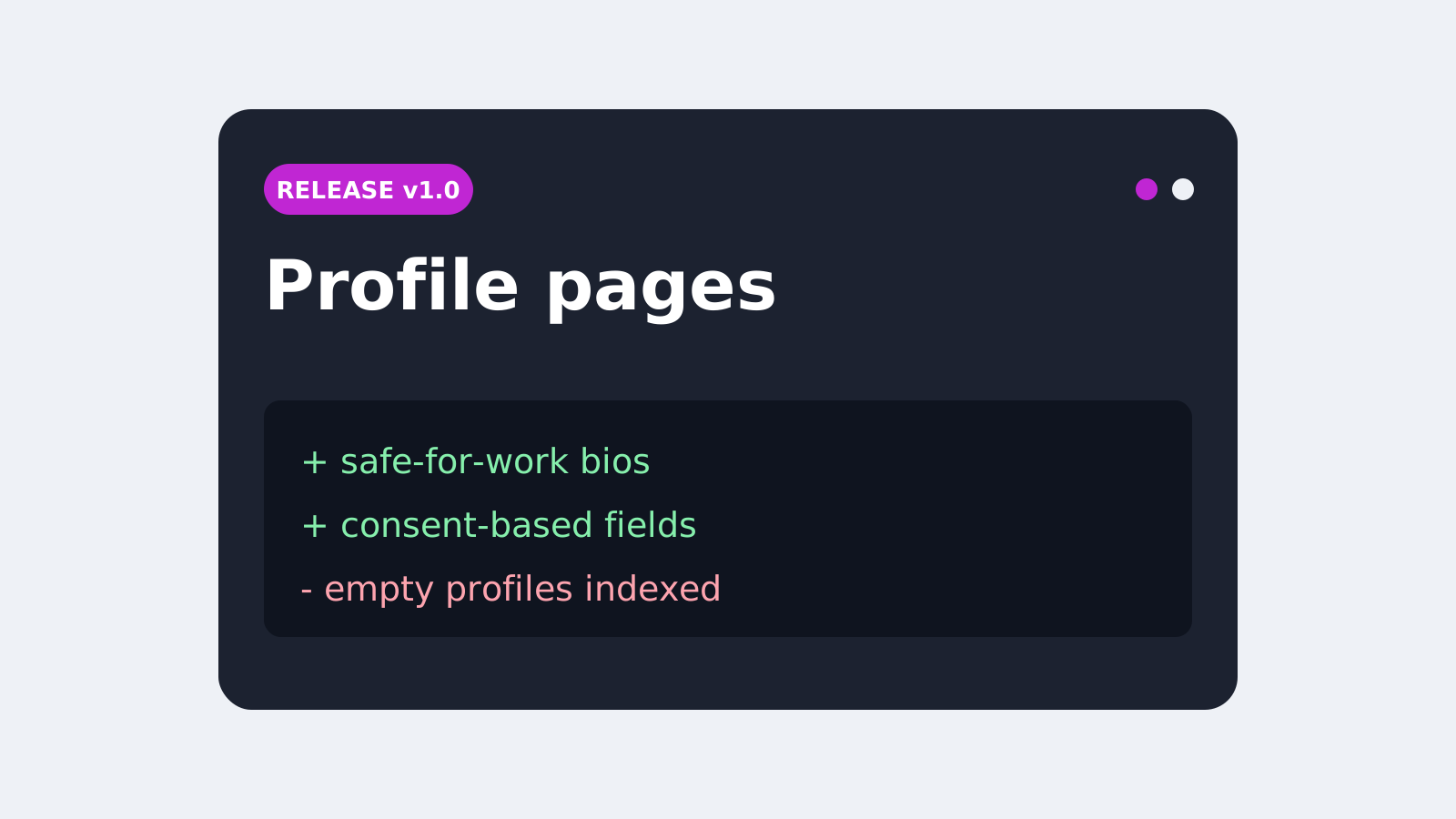
1.0 Consent comes before any markup
A creator profile is a public page about a real person. On an adult platform, that person may keep their work separate from family, employers or other parts of their life. So the first rule of profile SEO is not technical: publish only what the creator has chosen to make public, and make it easy for them to change or remove it.
- A clear setting for whether the profile appears in search at all.
- The creator chooses the display name, bio and profile image.
- Nothing from verification or payout records ever feeds the public template.
2.0 What card network rules mean for profiles
Mastercard's adult content standards, announced in 2021 and in force since that October, were written for content, but they shape profile pages directly. Payment specialists report that they now sit in section 9.4.1 of Mastercard's rules and apply to generated content as well as filmed content.
| Requirement | What it means for a public profile |
|---|---|
| Documented age and identity verification for everyone depicted and everyone uploading | A profile goes public only after the creator is verified, and never shows anyone else who has not been |
| Review before publication | Profile images, banners and bios pass the same review as uploads |
| Complaints resolved within seven business days, and removal on request by anyone depicted | Every profile needs a visible way to report it and a takedown path that works in days |
| Marketing and search terms that do not suggest minors or non-consent | Profile titles, tags and bios run through the blocklist before they go live |
None of this is optional for a platform that takes card payments, and all of it makes profiles safer to rank.
3.0 What a profile page should contain
| Include | Leave out |
|---|---|
| Stage name and a short bio in the creator's words | Legal name, location or anything the creator has not chosen to share |
| Safe-for-work profile image | Explicit thumbnails before verification |
| Content categories, update schedule, what members get | Keyword lists stuffed into the bio |
| Links to the creator's own public pages, if they want them | Links to other platforms added without asking |
4.0 Writing a profile that helps a fan choose
People who search a creator's name usually already know who they are looking for. They want to confirm they have found the right page and decide whether to subscribe. A good profile answers that in the first screen: who the creator is in their own words, what kind of content they make, how often they post, what a subscription includes and what it costs.
The bio should sound like the creator, not like a list of search terms. Offer creators a short guide and a few prompts, such as what they enjoy making and what members can expect, rather than a template they all fill the same way; a hundred profiles with the same sentences help nobody. Keep every word safe for work and free of anything that suggests youth, and let the creator approve the final text.
5.0 ProfilePage structured data
Google's ProfilePage markup is meant for sites where creators share first-hand perspectives. Its one required property is mainEntity, the person or organization the page is about. Recommended properties include dateCreated and dateModified, and Google asks that dateModified reflect real changes made by a person, not automated updates.
profile page markup, key lines
+ "@type": "ProfilePage",+ "mainEntity": { "@type": "Person", "name": "[stage name]", "description": "[creator's own bio]" }- "name": "[legal name from verification]"
The name in the markup should be the name on the page, which is the name the creator publishes under.
6.0 Protecting creators who use a stage name
Many creators work under a stage name so that their work cannot be traced to the rest of their life. Search engineering can undo that by accident, so the profile template should protect it by default.
- Strip metadata from every uploaded image, since photo files can carry the camera, the date and GPS coordinates of where they were taken.
- Rename image files on upload to neutral names, never the original file name, which may contain a real name.
- Keep legal names, emails and payout details out of page titles, alt text, structured data, sitemaps and URL slugs.
- Let creators choose a profile address that uses their stage name, and change it if they need to.
These are small engineering choices, and each one closes a route by which a profile could lead back to the person behind it.
7.0 Empty and inactive profiles
Platforms create profiles faster than creators fill them. A profile with no bio, no image and no content adds nothing to search and can make the whole site look thin. Keep a profile out of the index until it has real content, using a noindex tag, and take it down properly when the creator leaves.
A simple rule works: a profile becomes indexable once it has an approved bio, an approved safe-for-work image and a few pieces of published content, and it goes back to noindex if the creator stops posting for several months. Decide the exact thresholds with your content team, and apply them automatically so nobody has to remember.
8.0 Removal requests, handled in days
- A report link on every profile and every piece of public content, leading to a simple form.
- A check that the request is genuine, without asking the person for more than the process needs.
- Removal from the platform first, then from search: return a 404 or 410, drop the page from sitemaps, and use Search Console's removals tool if a copy is still showing.
- A record of each request and the date it was closed.
Two clocks apply. Mastercard expects complaints about illegal or non-consensual content resolved within seven business days, and the federal TAKE IT DOWN Act requires non-consensual intimate imagery to be removed within 48 hours of a valid request. Build for the shorter one. The wider indexing rules are in public vs member content.
9.0 Linking profiles into the site
Profiles rank better when category pages link to them and they link back to the categories they belong in. Keep that linking to public, safe-for-work pages. The template work, including tag hygiene and index control, is part of adult tech SEO, and profiles are a core part of the public layer on subscription platform SEO.
10.0 Measuring profile pages
The useful numbers are the share of profiles that meet the indexing rule, how many profile pages appear for searches of the creator's name, subscriptions that start on a profile reached from search, and the time taken to close each removal request. The last number matters as much as the others: a profile program that ranks well but handles removals slowly is a risk, not an asset. How profiles feed sign-ups is covered on membership growth.
11.0 References
The bodies behind the facts above. Their own pages are the authority if anything differs.
FAQ Questions
Should profiles use the creator's real name?
Only if the creator chooses to. Use the name they publish under, usually a stage name, in the page and in structured data. A legal name should never appear because a template pulled it from verification records.
Can members' profiles be indexed?
Usually not. Ordinary member accounts are private by default and have little search value. Index creator profiles that the creator has made public, and nothing else by default.
What happens when a creator deletes their account?
Take the profile down promptly and return a clear not-found or gone status, so search engines drop it. Remove it from sitemaps at the same time.
How fast must we remove a profile when asked?
Build for the shortest deadline that can apply: the TAKE IT DOWN Act requires non-consensual intimate imagery to be removed within 48 hours of a valid request, and Mastercard expects complaints resolved within seven business days.