research · Architecture · 7 min read
Public vs member content SEO: a decision for every page type
Public vs member content SEO starts with a hard fact: every adult platform ends up with thousands of URLs: categories, profiles, galleries, account screens, search results. Deciding page type by page type what is public, what is gated and what is never indexed is the single most useful architecture decision for search.
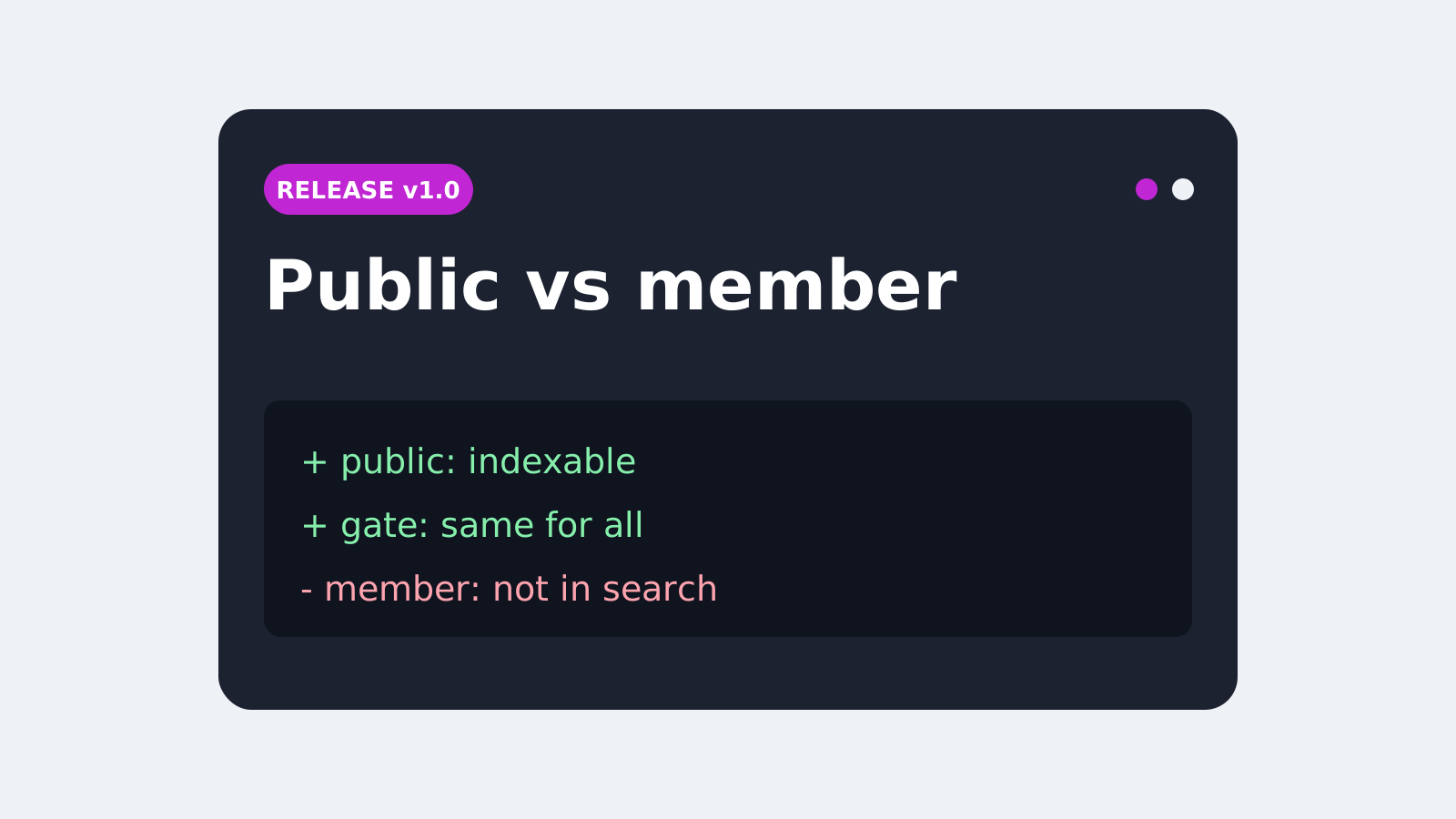
1.0 Why decide by page type
Nobody decides URL by URL on a platform with a hundred thousand pages. The decision has to be made once per template: every category page, every profile, every gallery, every account screen. Get the template right and every new page follows it; get it wrong and the mistake repeats a hundred thousand times.
It is also the decision that ties search to compliance. Where the age gate sits, and for which states, is set by your legal advice; the 27 states the Free Speech Coalition counted in July 2026 make that a live question for most US platforms, as summarized on adult SaaS marketing. What search architecture adds is the rest: which of the pages outside the gate should be found, and which should quietly stay out of results.
2.0 The decision table
| Page type | Layer | Index? |
|---|---|---|
| Home, pricing, help, billing and guides | Public | Yes |
| Category and curated tag pages | Public, safe-for-work previews only | Yes, if reviewed and they have real content |
| Creator or model profiles | Public bio, with the creator's consent | Yes, if the creator agrees |
| Public creator posts and teasers | Public, safe-for-work only | Usually no; they change fast and add little on their own |
| Comments, reviews and fan posts | Public or member, depending on the platform | Only from trusted contributors, with links marked |
| Explicit galleries and videos | Behind verification and payment | No, and never sent to anyone unverified |
| Media files: images, previews, video streams | Follow the page they belong to | No for member media; public images only if safe for work |
| Site search results, filters, sorts | Public but generated | No |
| Account, messages, billing screens | Member only, login required | No |
| Login, sign-up and verification screens | Public | No; useful to people, not to searchers |
Two rows cause most arguments. Creator posts look like fresh content, but each one alone is thin and short-lived; the profile is the page worth ranking. And login or verification screens are public, but nobody searches for them, so indexing them only adds clutter.
3.0 What each layer should return
A decision only holds if the server enforces it. This is what a crawler should receive for each kind of page:
| Kind of page | Response | Also needed |
|---|---|---|
| Public, indexable | 200 with content | Nothing extra |
| Public, not indexable | 200 with content | noindex in a robots meta tag or X-Robots-Tag header, and crawling allowed so it can be read |
| Generated URLs you never want crawled | Blocked in robots.txt | No noindex needed, since it would never be seen |
| Member only | Redirect to login, or 401 or 403 | The login page itself carries noindex |
| Removed for good | 404 or 410 | Taken out of the sitemap and internal links |
4.0 The tags that enforce it
Google's documentation offers two ways to keep a page out of results: a robots meta tag or an X-Robots-Tag HTTP header. The header also works for files that are not HTML, such as images and videos. Two details trip platforms up:
- Google does not support a noindex rule written in robots.txt.
- A page blocked by robots.txt cannot have its noindex tag read, so it may still appear in results. Google's own advice is to allow crawling and use noindex when the aim is to keep a page out of the index.
response header for an explicit video file
+ X-Robots-Tag: noindex- robots.txt: Noindex: /videos/
For member media, the header is a second line of defense, not the first. The first is that the file is only ever served to a verified, logged-in member.
5.0 Content your users write
Comments, fan posts, reviews and profile bios bring a different risk: spam. Google's guidance on preventing user-generated spam warns that spammers target open inputs, and that pages overrun with third-party spam can be removed or demoted in search. On an adult platform, spam links often point to exactly the kind of sites a card network would object to, which is why this belongs in the merchant-risk review too.
- Publish a clear abuse policy and show it at sign-up.
- Mark links in user content with rel="ugc" or nofollow, as Google recommends, and consider removing the attribute only for contributors with a long record of good posts.
- Keep posts from new accounts out of the index until they have some history, a step Google itself suggests.
- Run user text through the same blocklist of prohibited terms as your tags and search suggestions.
6.0 Profiles need consent before markup
Creator and model profiles can be among the pages that rank best, and they are about real people. Publish only what the creator has agreed to make public, keep it safe for work, and take a profile down promptly when asked. Search value never outweighs that. More on building these pages is in our research on member profile SEO.
7.0 When a page changes layer
Pages do not stay in one row forever, and the moves are where most leaks happen.
- A creator leaves: return 404 or 410, remove the profile from sitemaps and internal links, and do not redirect it to the home page, which Google tends to treat as a soft 404 (more on this in adult tech SEO).
- Public content moves behind the gate: remove it from the sitemap, stop sending the content to unverified visitors at once, and let Google recrawl the page to see the change.
- A gated page becomes a public guide: rewrite it as safe-for-work content before it opens, rather than removing the gate from explicit material.
8.0 Mistakes we find in audits
- Member thumbnails in the HTML of public category pages, visible to anyone who views the source.
- Video files served with no header and no login check, reachable by their direct address.
- Thousands of indexed internal search pages, some built from prohibited terms users typed, a risk we also cover under membership growth because it shapes what prospective members see.
- Sitemaps generated from the database that still list removed creators and gated pages.
- Robots.txt blocking pages that also carry noindex, so neither rule works as intended.
9.0 Putting it into practice
- List every template on the platform and assign it a row in the decision table.
- Check each template's response, head and headers against the layer table, logged in and logged out.
- Crawl the site and compare what is indexed with what should be, then fix the gaps in order of risk.
- Add the checks to your release process, so a new template cannot go live without a row. If you want a second view of your templates, ask for a growth audit.
This is the first release of our subscription platform SEO work, and the paywall side is covered in gated content SEO. The ninety-day order for all of it is in our roadmap guide.
FAQ Questions
Is robots.txt enough to keep member pages out of Google?
No. Robots.txt stops crawling, not indexing, and Google does not support a noindex rule inside robots.txt. Member pages should require login or verification, and pages you want dropped from results need a noindex tag that Google can actually crawl.
Should explicit images be indexed in image search?
Only if they are lawful to show without verification where they would appear, which is rarely the case. Keep explicit media behind the gate and serve it with a noindex header.
What about pages for creators who have left?
Remove them or return a clear 'not found' if the creator asks, and never keep an indexed page up against a creator's wishes.
How should we handle links in comments and fan posts?
Mark them with rel="ugc" or nofollow, as Google recommends, keep posts from new accounts out of the index until they have a history, and run all user text through your blocklist of prohibited terms.